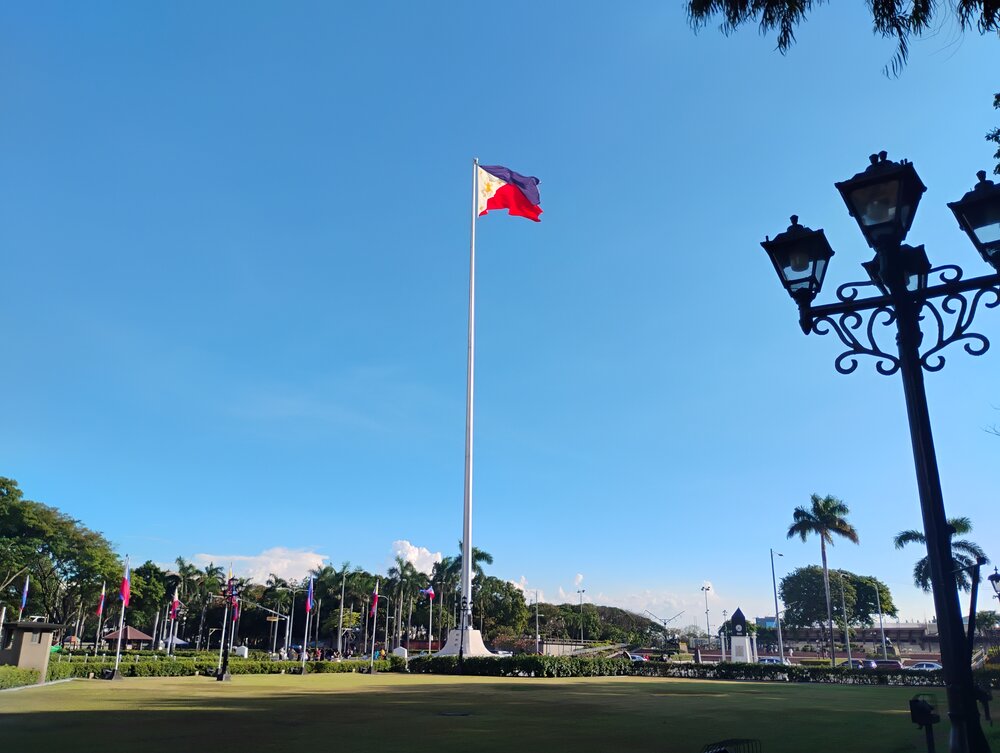
The Rizal Monument in Manila with the Philippine flag flying

Southeast Asia · Western Pacific

The Philippines Republika ng Pilipinas

A nation of more than seven thousand islands, scattered like a handful of green stones across the warm seas between the Pacific Ocean and the South China Sea.

Geography

The Philippines is an archipelago of 7,641 islands, gathered into three great groups — Luzon in the north, the Visayas at the heart, and Mindanao to the south. Together they form one of the largest island nations on earth, ringed by coral reefs and crowned by volcanoes.

The land is restless and dramatic: it sits along the Pacific Ring of Fire, where mountains smoke and the earth occasionally trembles. Mount Apo on Mindanao rises highest at 2,954 metres, while the surrounding waters hold some of the richest marine life in the world. The climate is tropical and maritime — hot, humid, and shaped each year by the monsoon and the long season of typhoons.

“Seven thousand islands, three hundred languages, one archipelago that has learned to live with the sea.”

The People & Their Languages

More than 115 million people call the islands home, making the Philippines one of the most populous countries in the world. They are a maritime, family-centred people whose communities have been knit together — and divided — by water for thousands of years.

Two languages are official: Filipino, built upon Tagalog, and English, a legacy of the early twentieth century and still the language of law, business, and the classroom. Beneath them flourish more than a hundred and seventy living tongues — Cebuano, Ilocano, Hiligaynon, Waray, Bikol, Kapampangan and many more — each carrying its own songs and stories.

Government

The Philippines is a unitary presidential constitutional republic. The President serves as both head of state and head of government, elected directly for a single six-year term. Laws are made by a two-chamber Congress — a Senate and a House of Representatives — and the present framework rests on the Constitution of 1987, written after the restoration of democracy. The capital is Manila, though the largest city is neighbouring Quezon City, both within the sprawling Metro Manila.

A Brief History

Long before written records, the islands were home to seafaring communities trading across Asia. Spain claimed the archipelago in the sixteenth century and ruled for more than three hundred years, leaving behind the Catholic faith and Hispanic names. On 12 June 1898 the Filipino people declared their independence — the date the nation still celebrates today. After a period under the United States and the hardship of the Second World War, full sovereignty was recognised on 4 July 1946, and the modern republic was born.
The Filipino Nation

Chapters of the Nation

Beyond its islands, the Philippines is a story of conquest and freedom, disaster and resilience, leaders and a hard-working people. Open a chapter to read its history.

Before the Ships Came

The Three Island Groups

How the peoples of Luzon, the Visayas, and Mindanao lived — and thrived — in the long centuries before foreign sails appeared on the horizon.

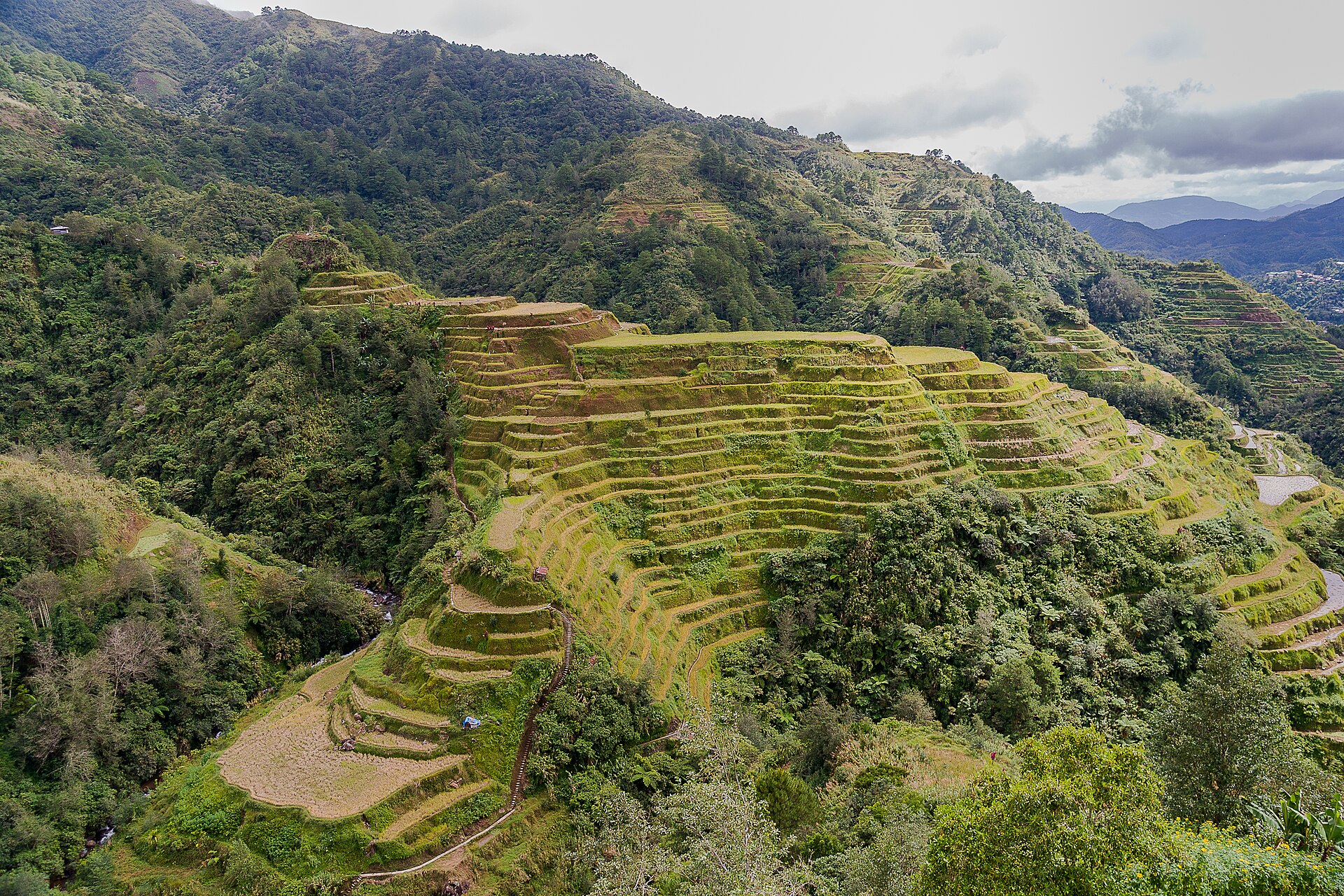
The Banaue rice terraces carved into the mountains of northern Luzon
The Banaue rice terraces, carved by hand into the Cordillera mountains of Luzon.

North

LuzonThe northern islands

Luzon, the great island of the north, held both mist-wrapped mountains and broad river plains. High in the Cordillera, the Ifugao and their neighbours carved entire mountainsides into rice terraces some two thousand years ago — vast stairways of stone and earth, fed by channelled streams, that still climb the slopes today.

In the lowlands, people lived in barangays — villages of a few dozen families led by a datu. They grew wet rice, fished the rivers and coasts, panned for gold, and wove cloth. By the 1500s the harbour-towns of Maynila and Tondo were busy ports, trading gold and goods with merchants from China, Japan, and Borneo, and keeping their records in the baybayin script.

Explore Luzon through the years →

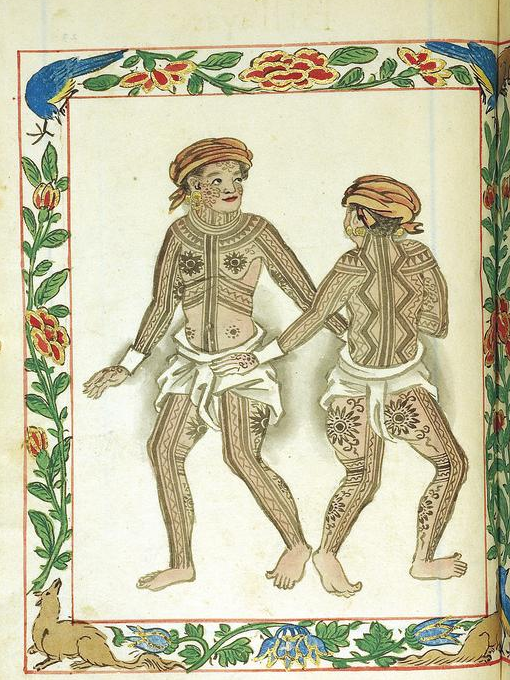
A Visayan noble couple depicted in the Boxer Codex of about 1590
A Visayan couple in the Boxer Codex, c. 1590. Early Spanish called the islanders Pintados — “the painted ones.”

Centre

The VisayasThe central islands

The Visayas are a scatter of islands at the country’s heart, and their people were born to the sea. They sailed swift outrigger boats — the balangay and the war-karakoa — from island to island to fish, trade, and raid. Spanish newcomers named them the Pintados, the painted ones, for the dense tattoos a warrior earned through acts of courage.

Life turned on rice, root crops, and the tides. Society ran from the datu and his warriors down to bound dependents, while the babaylan — most often a woman — healed the sick and spoke with the ancestral spirits. Polities such as the Rajahnate of Cebu and the confederacy of Madja-as on Panay traded freely across the surrounding seas.

Explore the Visayas through the years →

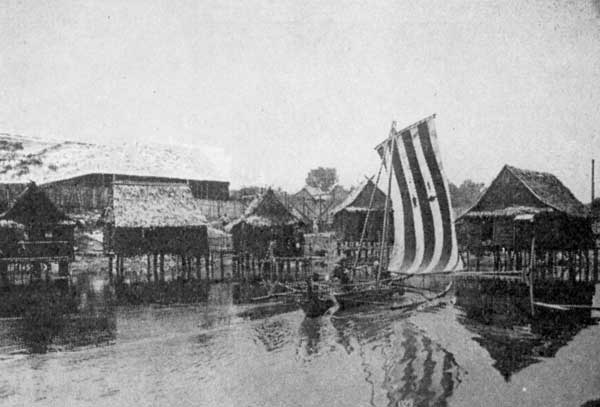
A Sama-Bajau vinta sailing boat with layered sails, photographed in 1923
A Sama-Bajau vinta under its layered sails, 1923 — the seacraft of the southern trading peoples.

South

MindanaoThe southern islands

Mindanao, the large southern island, looked outward to the wider Malay world. From the fourteenth century, Islam arrived along the trade routes, and two powerful sultanates rose — Sulu and Maguindanao — sending pearls, gold, beeswax, and forest goods across the Sulu and Celebes Seas to Borneo, the Moluccas, and China.

Maritime peoples like the Sama-Bajau and Tausug lived by the water, sailing the bright-sailed vinta. Inland dwelt the Lumad — dozens of indigenous peoples such as the T’boli, Manobo, and Subanen — who farmed, hunted, cast fine brass, and wove the dreamlike t’nalak cloth. So strong were the sultanates that much of Mindanao stayed independent of Spain for three centuries.

Explore Mindanao through the years →

Images via Wikimedia Commons — Rizal Monument & Philippine flag, 2025 (CC BY-SA 4.0); Banaue Rice Terraces © CEphoto, Uwe Aranas (CC BY-SA 3.0); Visayan couple, Boxer Codex c. 1590 (public domain); Sama-Bajau vinta, 1923 (public domain).