The story of the Philippines is, for much of its recorded history, a story of empires arriving by sea. Spain, the United States, and Japan each ruled these islands in turn — and each was met, sooner or later, by a people determined to be free.
Three Centuries of Spain · 1565–1898
Ferdinand Magellan reached the islands in 1521 and was killed at Mactan by the chieftain Lapulapu. Permanent Spanish rule began in 1565 under Miguel López de Legazpi, and by 1571 Manila was the colonial capital. For 333 years Spain governed through friars and governors, spreading the Catholic faith and binding the islands to the wider world through the Manila–Acapulco galleon trade, which carried silver and silk between Asia and the Americas for 250 years.
By the late nineteenth century, educated Filipinos — the ilustrados — began to demand reform. The writer José Rizal stirred the nation with his novels and was executed in 1896. That same year the secret society of the Katipunan launched a revolution, and on 12 June 1898, at Kawit in Cavite, independence was proclaimed.
The American Century Begins · 1898–1946
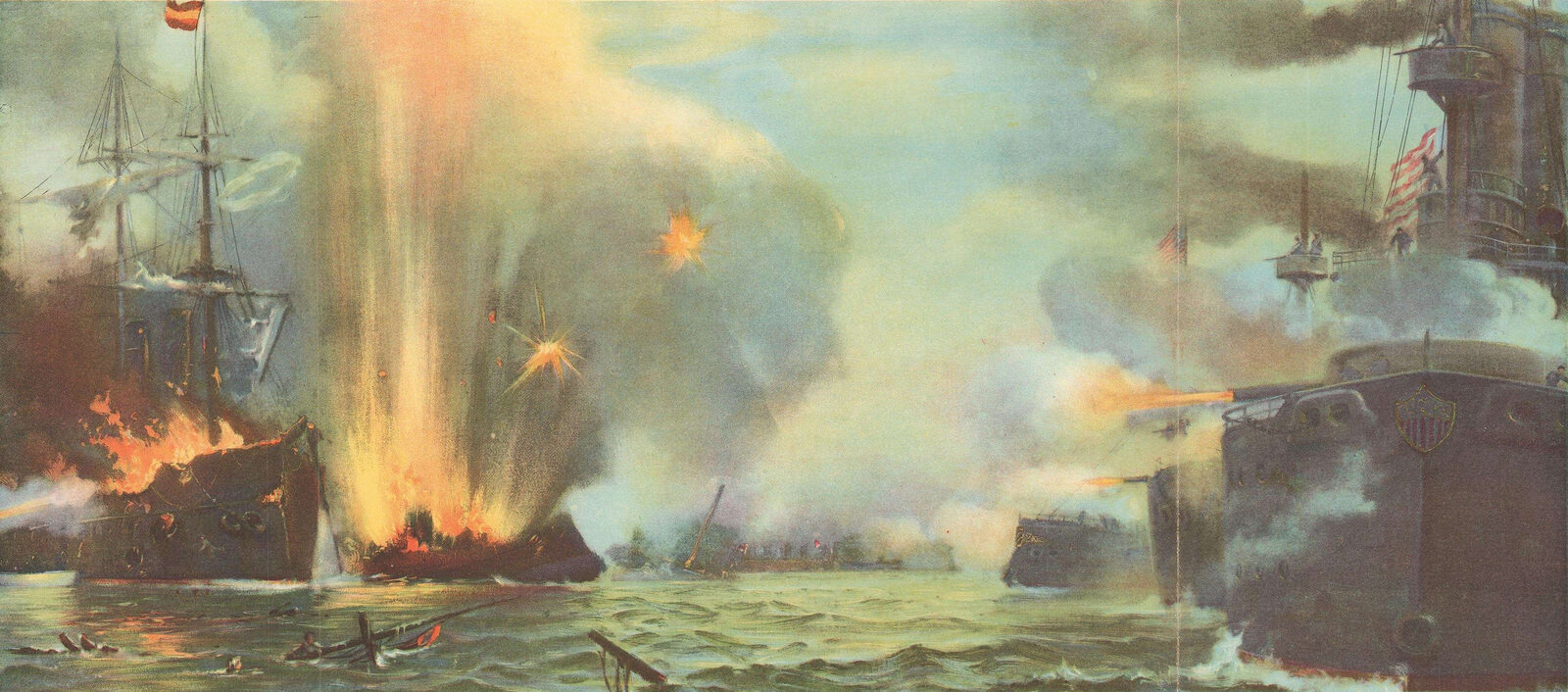
Freedom proved brief. In the Spanish-American War, Commodore Dewey destroyed the Spanish fleet at the Battle of Manila Bay in May 1898, and by the Treaty of Paris, Spain handed the islands to the United States for twenty million dollars. Filipinos resisted in the bitter Philippine–American War (1899–1902).
American rule, however, also reshaped the country: it brought the English language, a nationwide public-school system staffed by teachers called the Thomasites, new roads and hospitals, and, in 1935, a self-governing Commonwealth preparing the nation for independence.
War and Occupation · 1942–1945
The Second World War struck hard. Japanese forces invaded after Pearl Harbor; the defenders of Bataan and Corregidor fell, and prisoners endured the infamous Bataan Death March. For three years Filipinos lived under occupation while guerrillas fought on. General MacArthur fulfilled his promise — “I shall return” — landing at Leyte in 1944, but the liberation of Manila in 1945 left the city among the most devastated of the entire war.
“The islands changed hands among empires three times — yet the longing for freedom never did.”
Freedom at Last
Full sovereignty came on 4 July 1946, when the United States formally recognised the independent Republic of the Philippines. In 1962 the nation moved its Independence Day back to 12 June — honouring the original 1898 declaration, and the long fight that made it true.